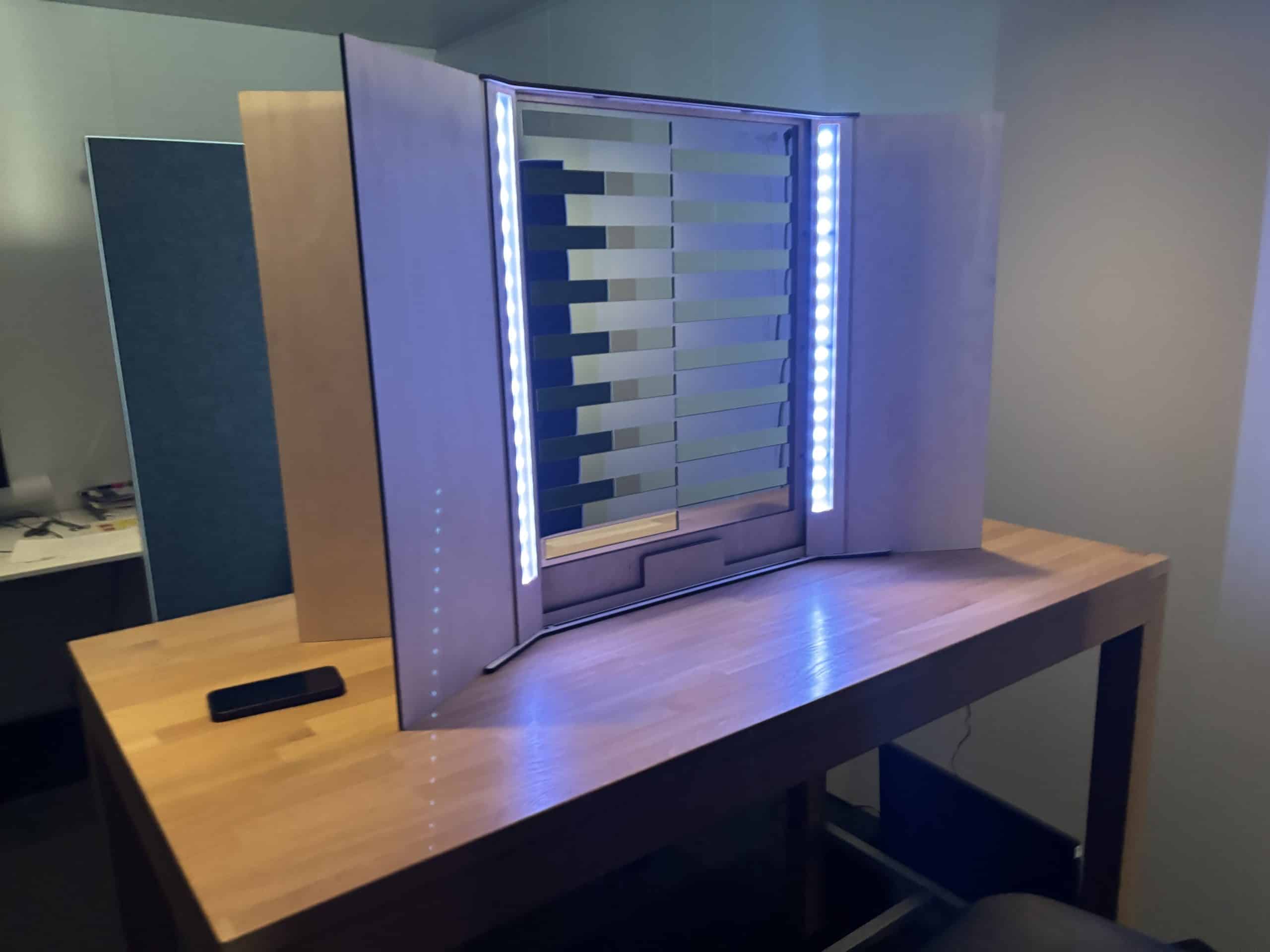
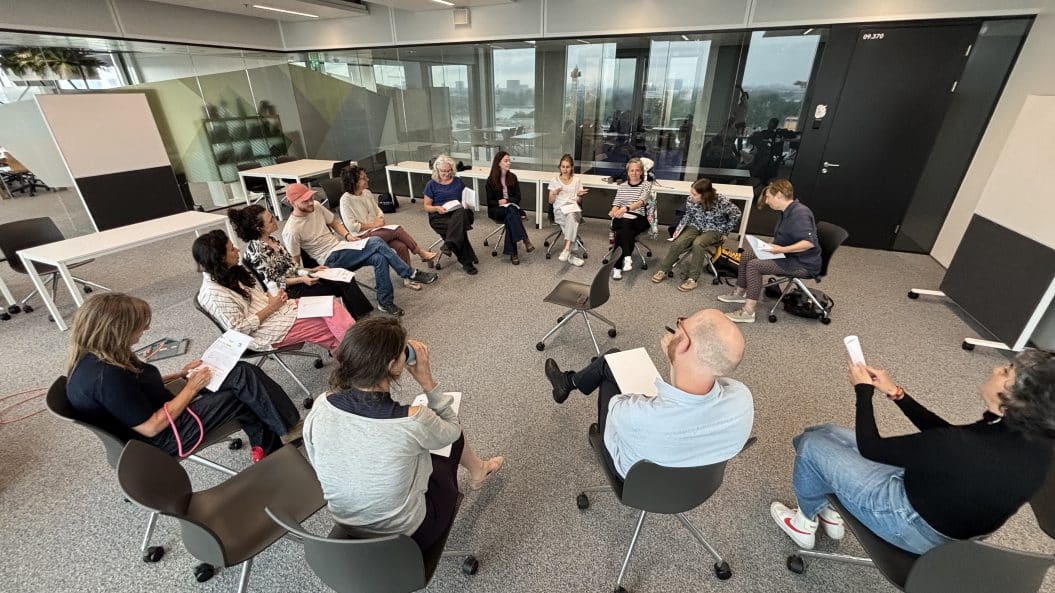
On June 2nd, we hosted an ESCalator session at Inholland, inviting our ESCreatives, professors, and researchers to explore the Empathoscope: an intriguing boundary object developed through a collaboration between Jeroen Peeters (Future of Now) and Guilherme de Baère with the Societal Impact Design professorship. Senior researcher Laura Niño reflects on this ESCalator.
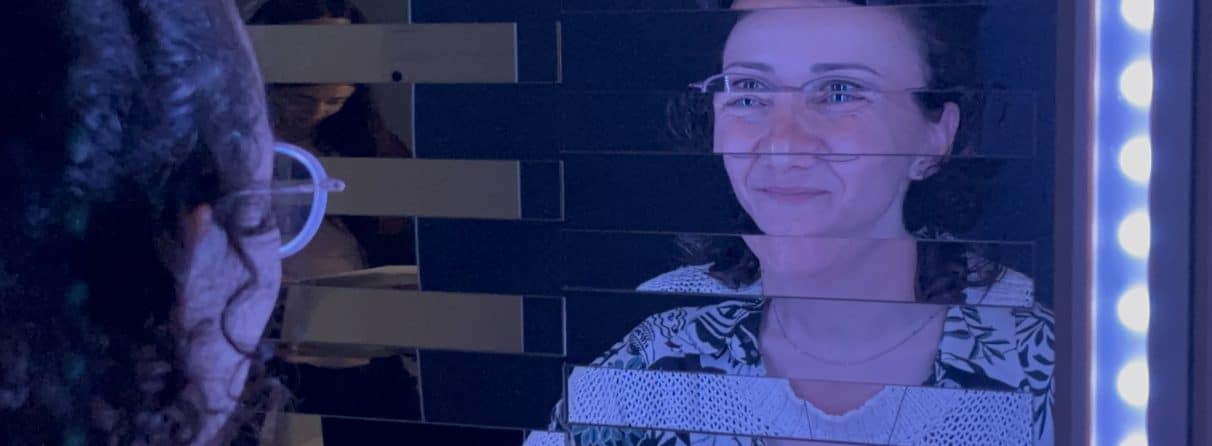
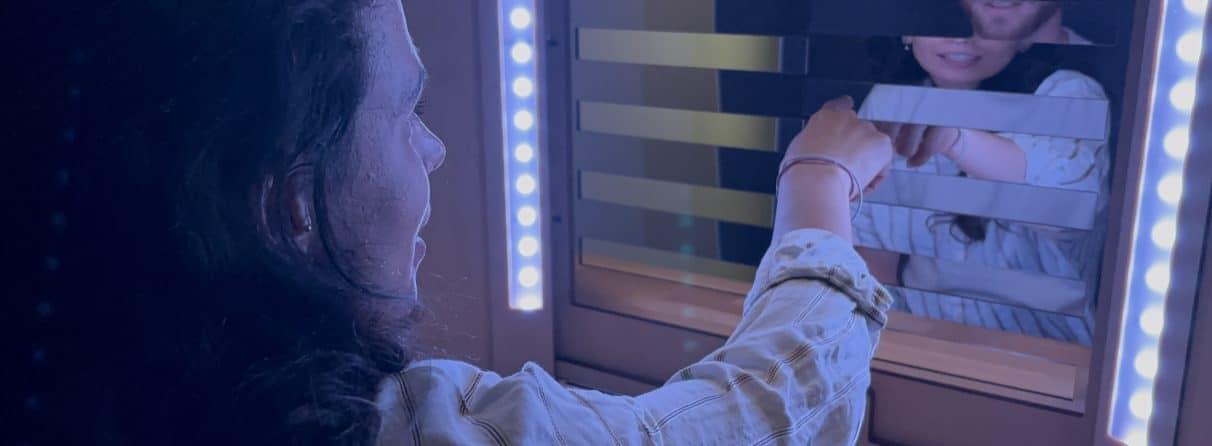
The Empathoscope is a compact yet powerful artifact (70 × 70 × 20 cm), constructed from partial mirrors, a programmed lighting sequence, and a wooden structure. Placed on a table in a dimly lit environment, it is designed to spark curiosity and invite a different kind of encounter. One that engages the senses, disrupts the glazing patterns of interaction, and opens space to see the other and oneself in a different light, literally and figuratively.
As a senior researcher within the professorship, it was a pleasure to witness our ESCrowd engage with the installation. Having experienced the Empathoscope multiple times during its development phase with Jeroen, Gui, Fabian, and Wina, I had already begun to see parallels with transition processes. Like many societal transformation projects, the experience is characterized by uncertainty, curiosity, and the continuous need to reassess what is happening in the moment.
What struck me again during this session is how the Empathoscope operates in a completely different “language” than the one we typically use when discussing systemic change. Where transition processes are often framed in rational, structured, and outcome-oriented ways, the Empathoscope does something else entirely. Within just a few minutes, it shifts people into a different mode of being, one where perception, sensation, and awareness take precedence over analysis. This, however, needs further reflection and work. On its own, without further reflection, the Empathsocope becomes mostly an intriguing moment.