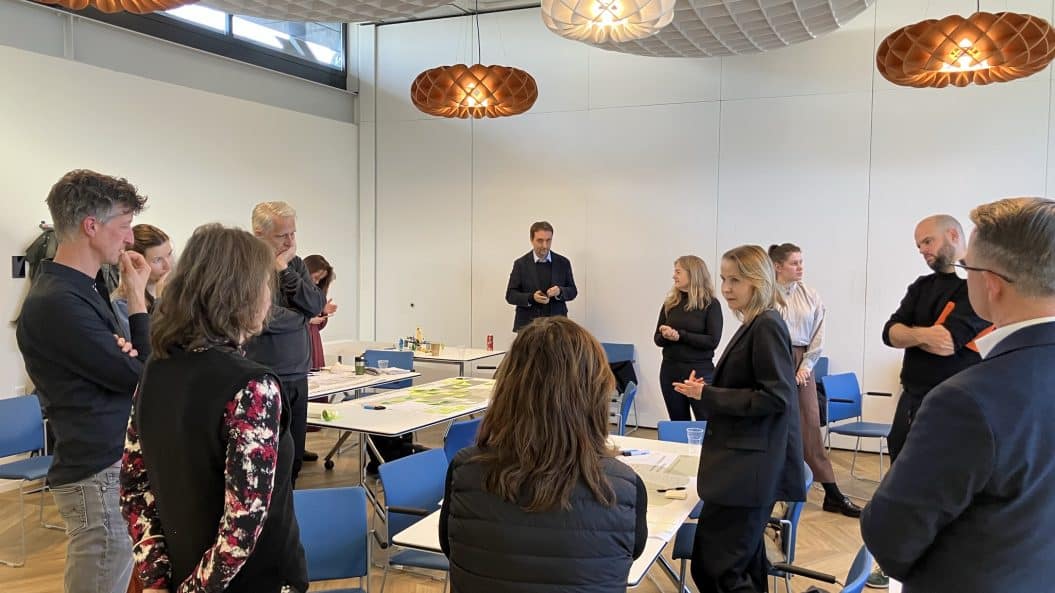
On 31 March 2026, the ESCuela training led by De Haagse Hogeschool took place on “The Art of Sustaining Networks”. The day was built around one central focus, namely, “how do networks flourish beyond time? This event explored collaborative tools and explorations to dive into the essence, challenges, and pitfalls of sustaining networks.
The Power of Play: Mapping Collective Strength
The training began by shifting the focus from the network as an abstract concept to the individuals within it. Through a “Super-power exercise,” participants mapped their personal strengths in duos and quartets, eventually sharing these conversations to identify the collective “network power” presented in the room. As a participant explained: “Surprisingly, the super-powers helped to change perspective on your abilities and mirror them and connect them with those of others.” It showed the power of collaboration.
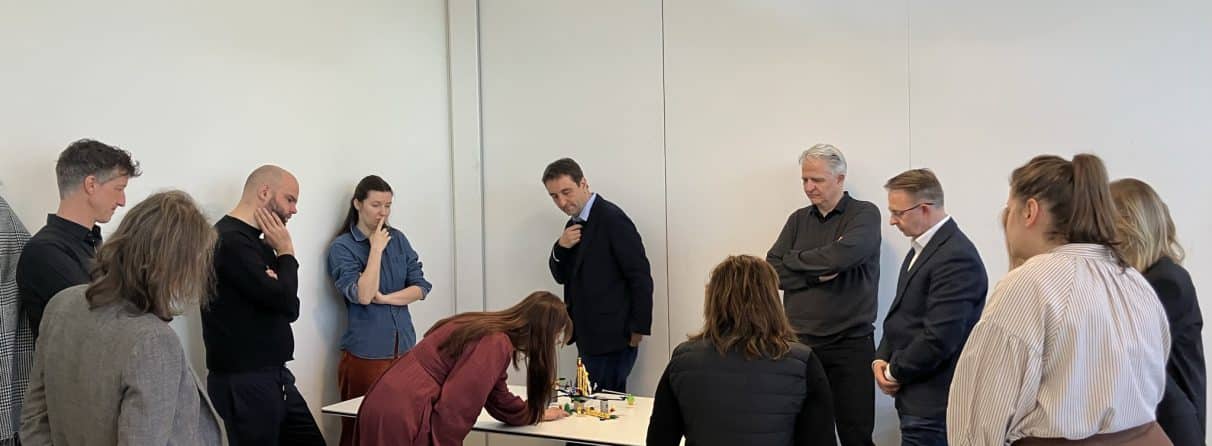
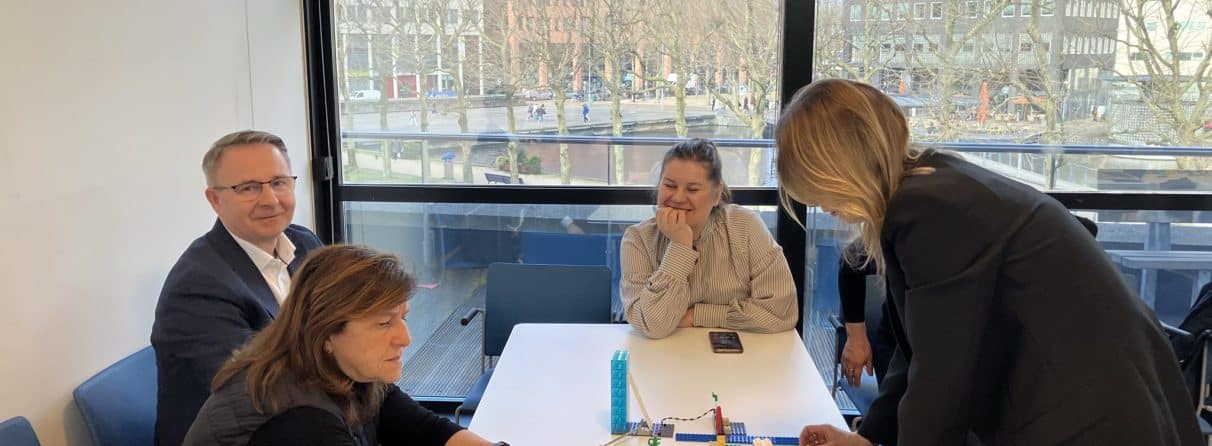
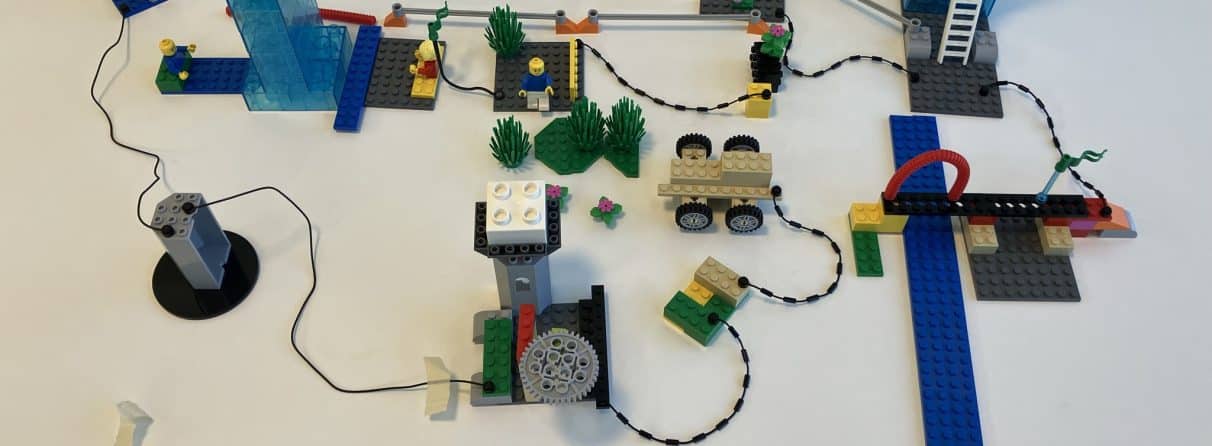
Once the people’s superpowers were presented, the workshop delved deeper into the challenges faced in networks. The facilitators integrated the LEGO Serious Play (LSP) method to ask participants to build models of the challenges they face in their networks. They were divided into two tables for this session.
The LEGO Serious Play (LSP) exercise began with a foundational “warm-up” activity intended to introduce the framework. Participants were asked to construct a tower or a bridge in 1,5 minutes, following only one requirement to begin with a blue brick and end with a brown one. This exercise illustrated the core principle that, even under identical constraints, each individual produces a unique model. Additionally, the varied results highlighted how personal expectations, fears, and assumptions inherently shape our perception of our role in networks.
Diving deeper into the challenges found in networks, participants built individual models representing their specific network hurdles. After a first round of discussion, these were merged into shared models that represented the collective landscape. After each table pitched their challenges in a shared landscape, they were asked to place “flags” in specific parts of their model where they identified potential opportunities to sustain the networks amid these challenges. The session was concluded by turning their dotted challenges into potential opportunities within networks.
The Theoretical Framework: The Sustainable Networks
After a hands-on morning with meaningful conversations on the practical challenges discovered in networks, the afternoon provided a valuable overview of the theoretical framework of different elements of networks, how they are scaled (up, down, deep, in, scree, etc.), and why they fail. “The presentation confirmed what we learned in the morning during the LSP workshop,” explained one of the participants.
Understanding how to sustain a network also requires knowing why they often collapse. The workshop identified several critical “traps”:
- Generic Reasoning: networks fail due to a lack of a clear strategic message, underestimating the time factor, or allowing the initial “drive and motivation” of the “coalition of the willing” to fade.
- Process-Driven Reasoning: Resistance to the “failing-forward” principle or being unwilling to build upon existing achievements can stall progress.
- Human Elements: A risk is losing the “fun” and “playful” element of collaboration. Furthermore, failure often occurs when members stop being curious about each other’s cultures or fail to develop a “common language,” leading to ideas being “lost in translation”.
Application: The Network Sustainability Canvas
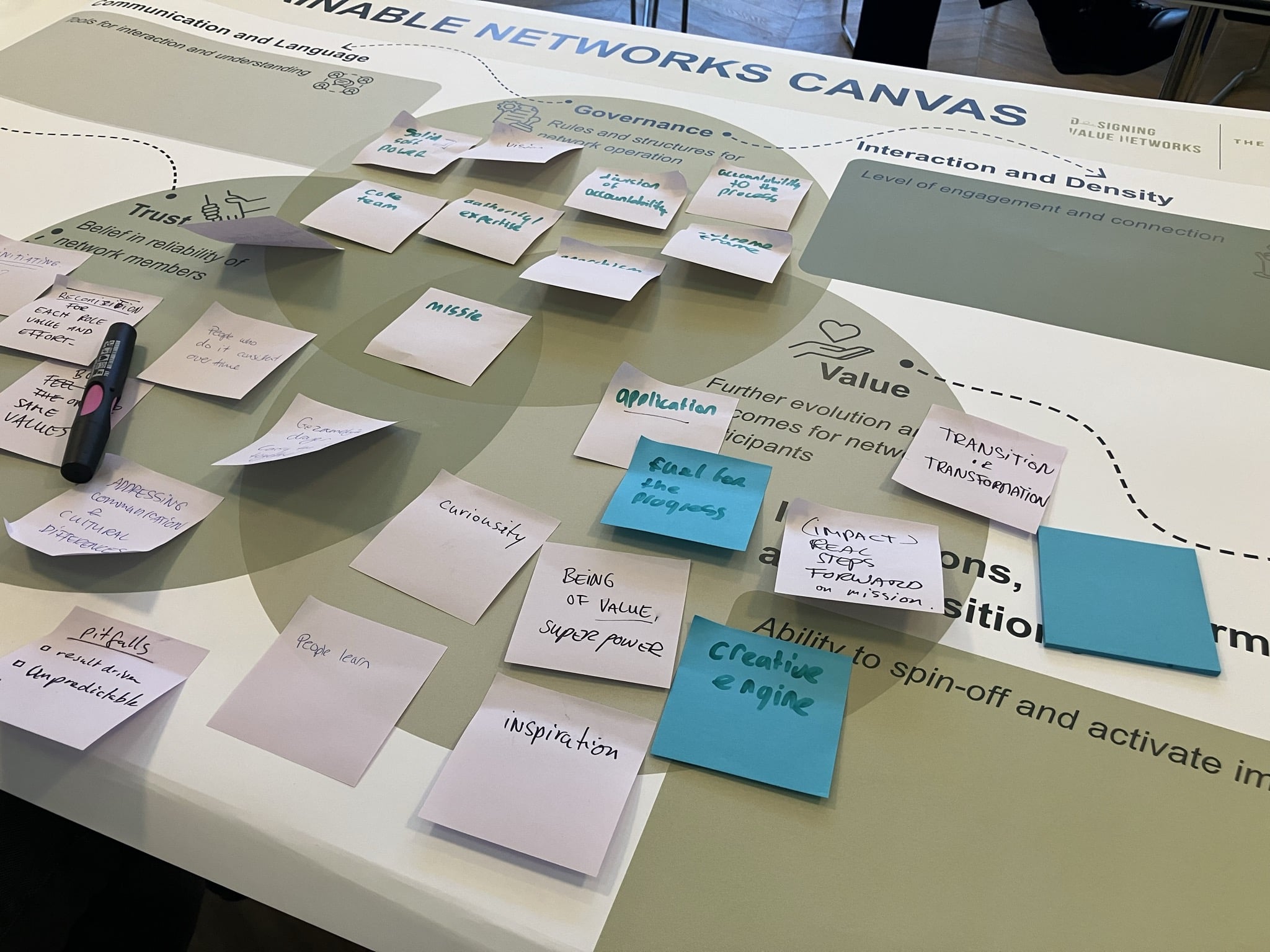
A highlight was the introduction of the Sustainable Networks Canvas, a framework developed by Designing Value Networks at THUAS. The Sustainable Networks Canvas provides a strategic blueprint for maintaining the health and longevity of collaborative systems through three primary pillars: governance, trust, and value. “I never realised how important these pillars were to sustaining the networks,” said one of the participants, “it is much more than just organising networking activities.” By establishing clear organisational structures and fostering interpersonal reliability, these networks ensure that participants remain motivated by both individual and collective benefits.
The three primary pillars are defined as follows:
- Governance: This provides the clarity, stability, and transparency required for operations; without it, networks risk becoming fragmented.
- Trust: Trust is built through reliability, fairness, and repeated interaction. Without it, connections remain merely transactional.
- Value: Networks must continuously deliver value to both the system as a whole and individual participants to maintain long-term engagement.
Ultimately, this canvas positions networks as essential engines for innovation and large-scale social transformation, driven by the long-term commitment and shared ownership of their actors.
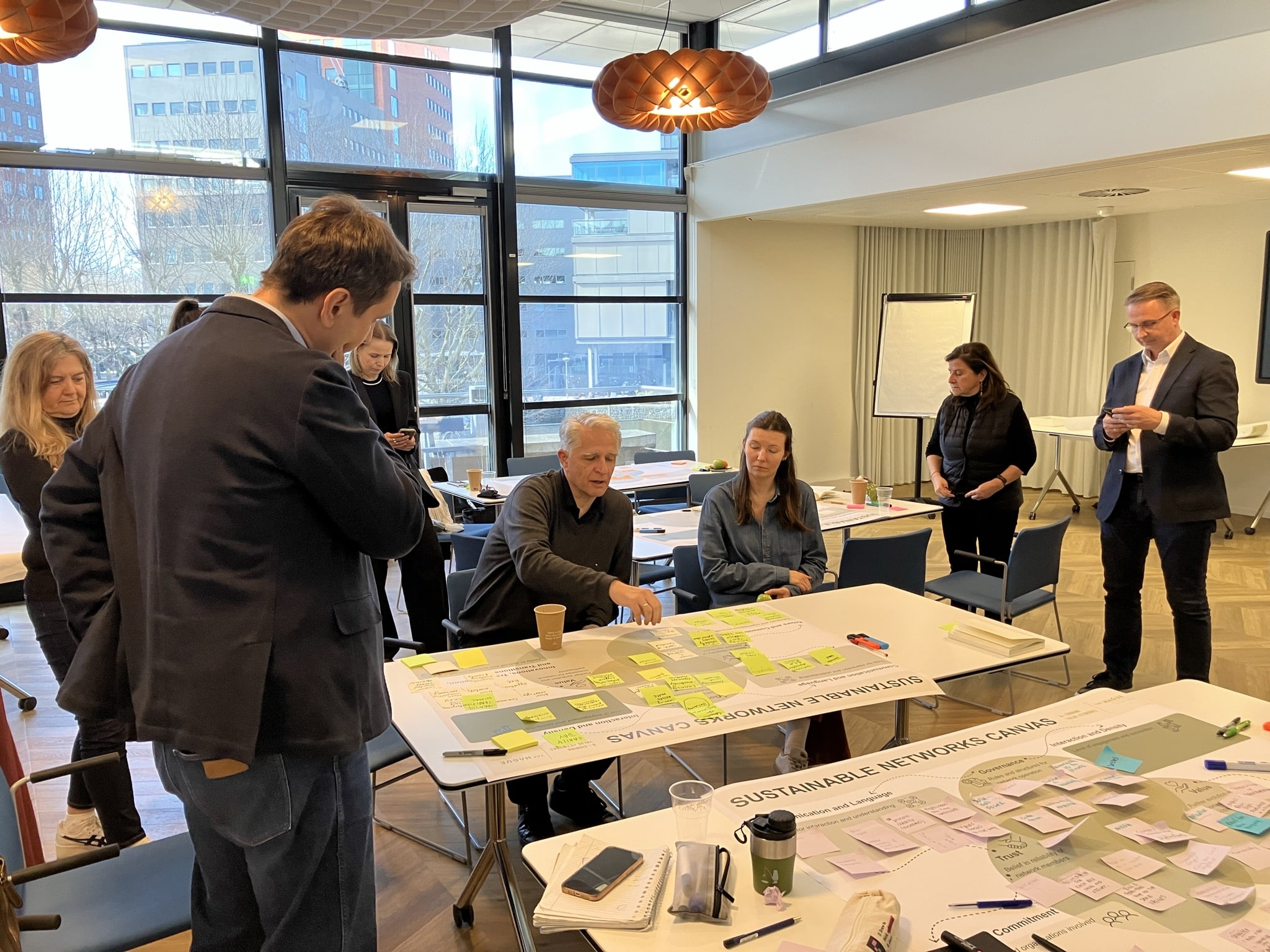
Dividing the tables into four themes, namely creative, academic, agriculture, and healthcare. Putting the learned theory into practice, the participants delved into the canvas and played with the tool’s elements to explore and discuss the networks and their challenges.
From Willingness to Action
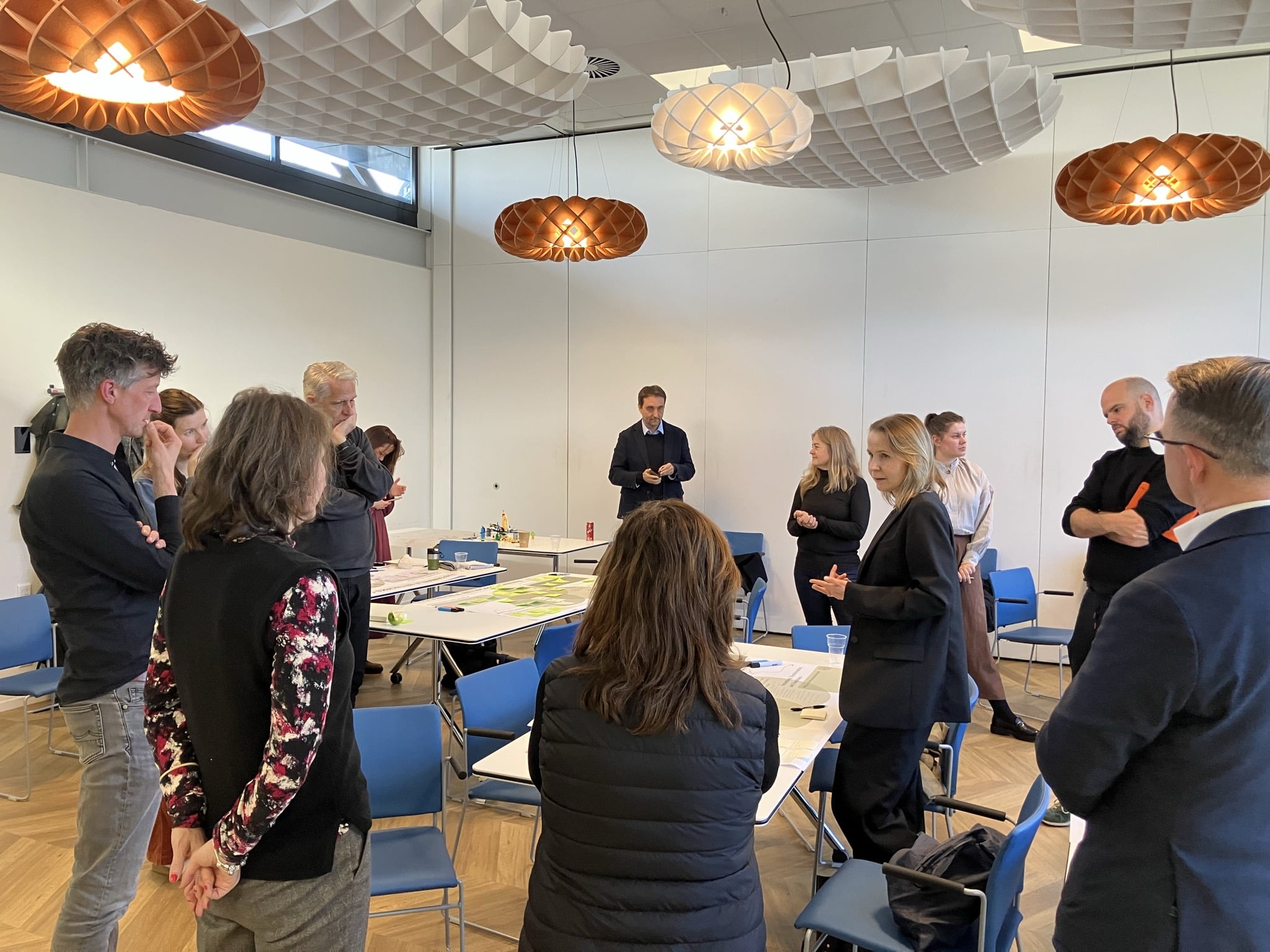
The training concluded with a call to move from a “coalition of the willing” to a “coalition of the doing (and daring)”. The final takeaway was a reminder that for a network to flourish, it must accept uncertainty as part of its DNA and view itself as a platform for collective transformation. According to a participant: “the day was full but all the activities were necessary to understand how complex working in networks is. Also, we learned how to purposefully design a network with the canvas. That is a great asset to my skillset.” As the day closed with “bee-ing” around the tables for collaborative exchange, it was clear that sustaining a network is less about rigid planning and more about the art of learning together.