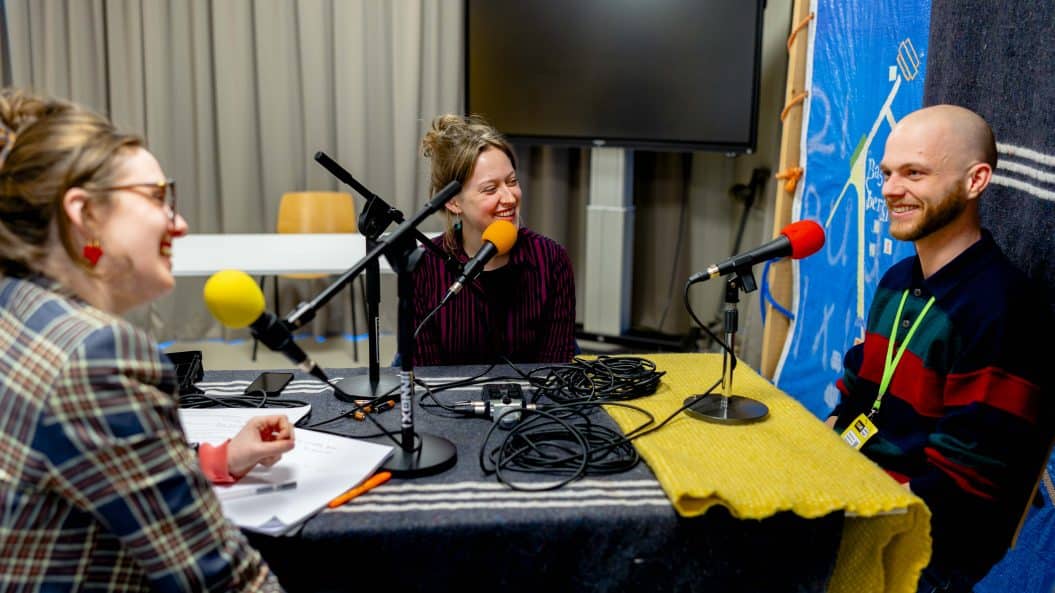
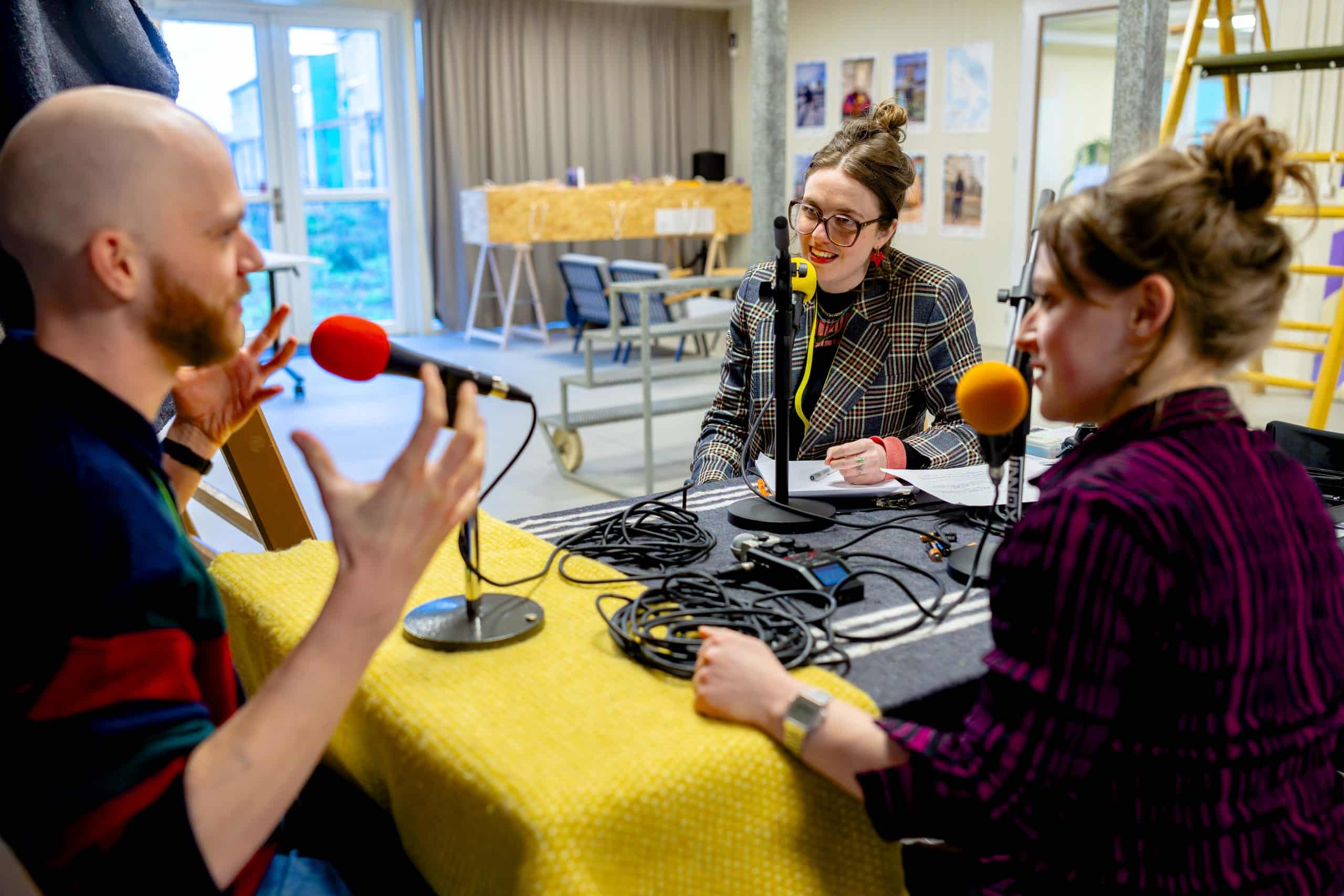
The insights shared in this blog post are the result of a unique collaboration by a new generation of transition designers, facilitators, and thinkers. The initiative was sparked by Youetta Visser, who first connected with Maria Geuze and Sterre van de Ven, through her project Navigeren in Transitienetwerken.
Inspired by their design-led work with the Slow Food Youth Network (SFYN NL), Youetta envisioned a “podcast-crew” that connected the Expertisenetwork Systemic Co-design (ESC) to such grassroots transition movements and involved Maria and Sterre in doing so at the ESConference in 2026. The insights in this blog post are drawn from Maria and Sterre’s interview work for the podcast, which highlights their backgrounds and expertise as transition thinkers.
ESCape towards Impact
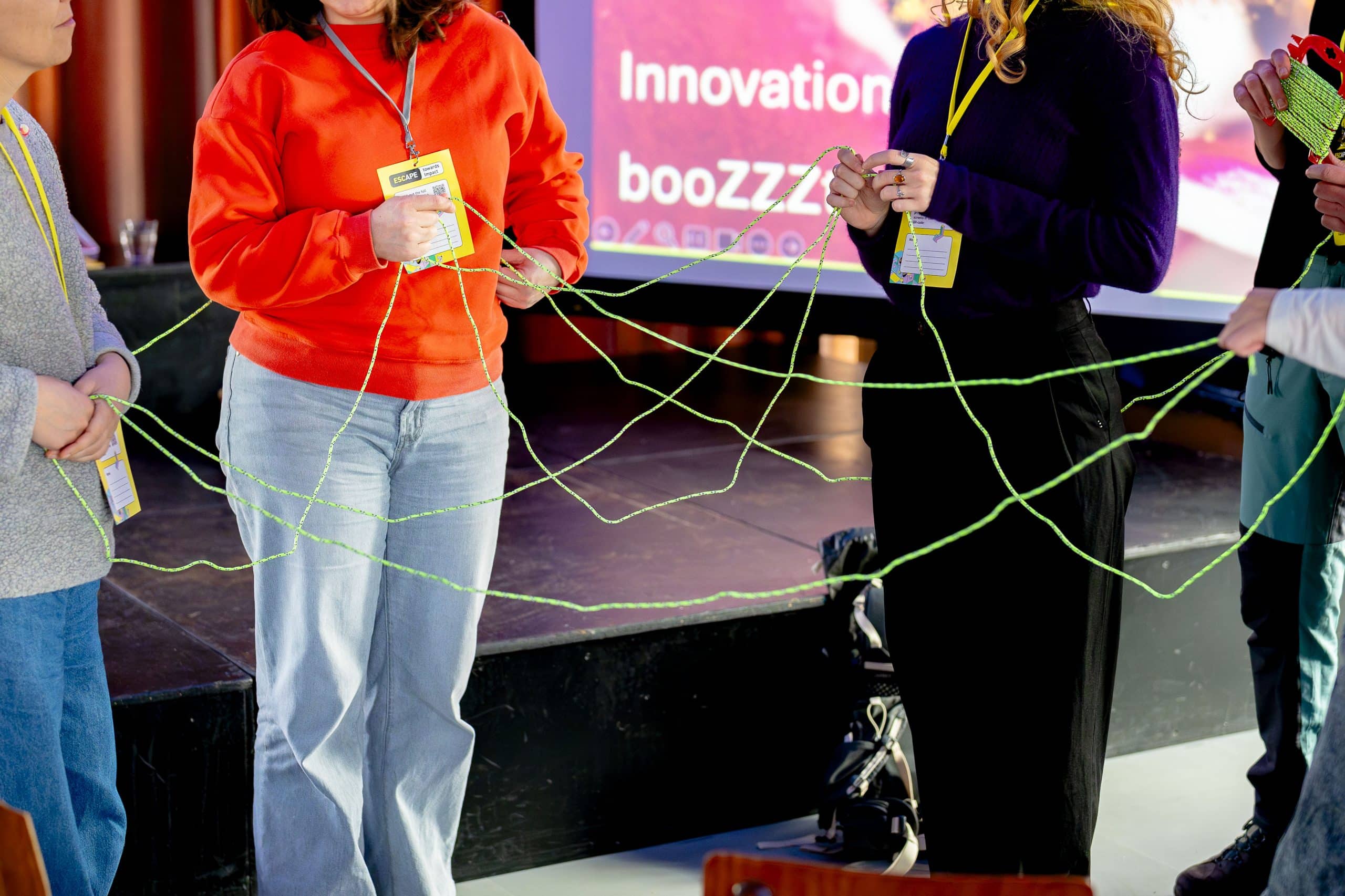
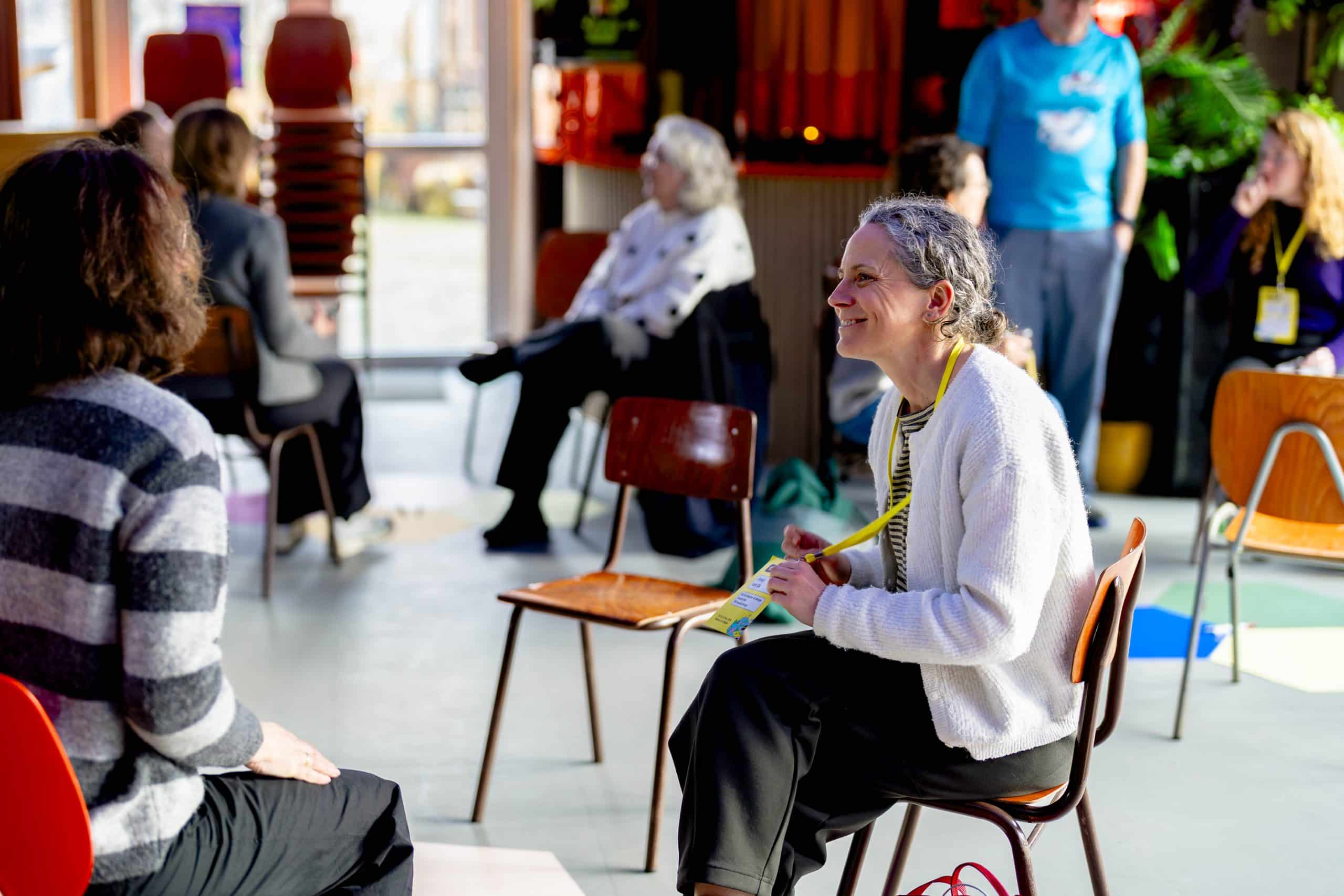
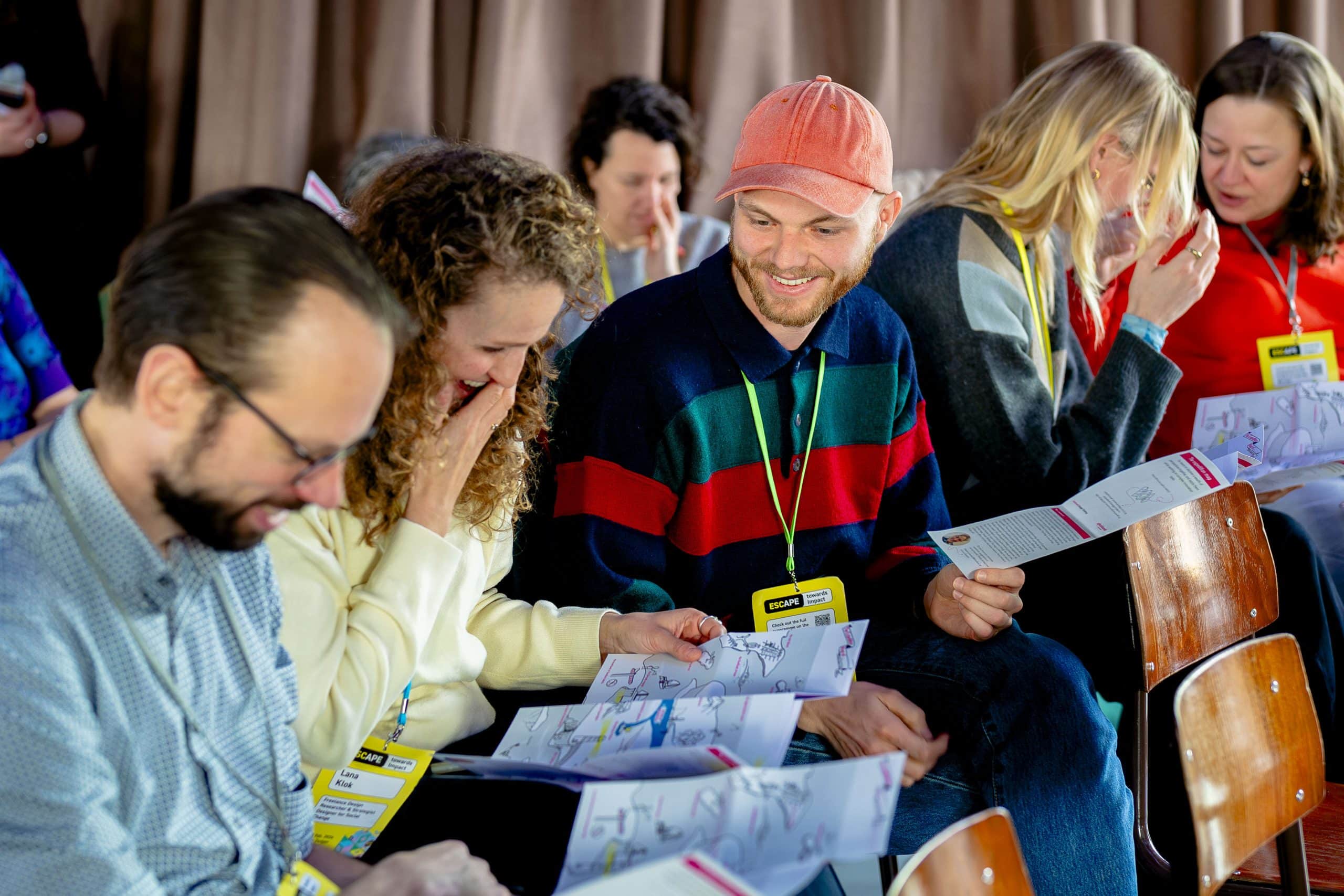
The 2026 ESConference ESCape towards Impact in Amsterdam wasn’t your typical academic gathering. The event unfolded as a “beehive” of activity, designed by Sietske Klooster, a professional doctorate researcher at Inholland, who moved participants from rational theory into the practical, embodied world of Systemic Co-Design (SCD). Here are the key learnings from the experts, designers, and attendees who spent the day “swarming” through the city.
1. Design is about creating agency and connection
Professor Wina Smeenk, Chair of ESC, kicked off the day by redefining what “design” means in a social context. Rather than focusing on products, she views design as a tool for navigation.
“Systemic Co-Design is about exploring; it’s about connecting people, finding new paths together, and envisioning and bringing new futures into focus… a positive vibe emerges; everyone gets the sense that it’s possible to find a way out of this complex situation. That’s the starting point. We call that agency”.
2. Moving from “head” to “body” (Embodiment)
Sietske Klooster highlighted the importance of embodiment, using physical experience to discover possible routes of change in complex systems.
Sietske explained that we must look at what our bodies can teach us because “we don’t ‘know’ it yet” intellectually. This resonated deeply with Sterre van de Ven, who noted:
“I was very inspired today because Sietske invited us to step out of our heads, out of rational thinking, and into our bodies… In the environments I usually find myself in, a more rational approach is the norm… When you tune into your feelings, something happens that you didn’t foresee beforehand”.
3. Making the system tangible
Jochem Galama, an ESC partner and visual thinker, demonstrated how to make abstract systems visible through his “Mechanical Twin” methodology. By using interlocking plastic gears, participants could literally “feel” the friction in an organization.
“In collaborations, there is often pressure, which leads to counterpressure, and sometimes friction… By making these feelings and interactions tactile/tangible here, for example, the little gear gets stuck somewhere, a deeper insight emerges”.
4. Structuring the “organized chaos”
For many, the design process can feel messy. However, Jessy van Os of the social design agency KO emphasized that a designer’s role is to provide structure to that chaos.
“Designers are comfortable with chaos; to them, it doesn’t feel like chaos at all… it’s a highly structured process, always tailored to the situation. The only thing is that we can’t predict in advance what the result will be”.
Jessy pointed out that building trust is essential, as clients must learn to “trust the process” even when the outcome is unknown.
5. Empathy beyond the human perspective
One of the most surprising insights came from the “swarming” assignments, where participants were encouraged to empathize with non-human actors. Attendee Pom, a recent design graduate, found this particularly eye-opening:
“Actually, I also spent a lot of time on my own, because the assignment was to try to empathize with beings other than humans; a bird, for example, or a tree… I found myself on the quay, staring at a coot… it really gave me a different perspective”.
Conclusion: learning by doing
The overarching takeaway from the 2026 ESConference Escape towards Impact was that systemic change cannot be planned in a vacuum; it must be orchestrated together, drawing on new perspectives, our senses, and intuition to navigate and carve out novel possibilities for rethinking society. As Maria, transition designer and one of the two podcast lead, observed,
“moving forward in major transitions requires ‘standing with our feet in the clay together’ and starting small to make connections between social issues and design.”
The conference proved that by embracing the “chaos” of the swarm and trusting the collective process, new insights for social change can truly take flight.