Well-functioning programme
The expertise network has achieved a great deal over the past four years. ‘Through our work, we have developed a well-functioning programme and established a proactive programme team,’ says Wina. “The programme consists of various programme lines, such as closed peer review sessions, known as ESCapades. In these sessions, a lecturer and a practice partner delve into a current issue. There are also ESCalators: bi-monthly learning network meetings with several researchers and one or more practice partners and the public. Twice a year, we organise ESConferences involving all research groups, many partners, agencies and industry organisations.”
Knowledge about systemic co-design
ESC has become a vibrant network and is therefore fully in line with the objective of the SPRONG grant to form a strong collaboration across the boundaries of universities of applied sciences. Significant progress has also been made in terms of content. Four years ago, systemic co-design was still a new concept, but it has now taken root as an approach to tackling all kinds of social issues. ‘Through various projects on themes such as safety, sustainable entrepreneurship and digital inclusion, we have learned a lot, for example the importance of investing in trust and relationships in advance,’ says Wina. “There is a Systemic Co-Design framework. This consists of the competencies for Systemic Co-Design: appreciating different perspectives, recognising and acknowledging relationships, exploring system boundaries and understanding emergence. We publish information about our Systemic Co-Design methodologies and knowledge products on our ESC website, which change professionals can use.”
Further developing knowledge products of partners
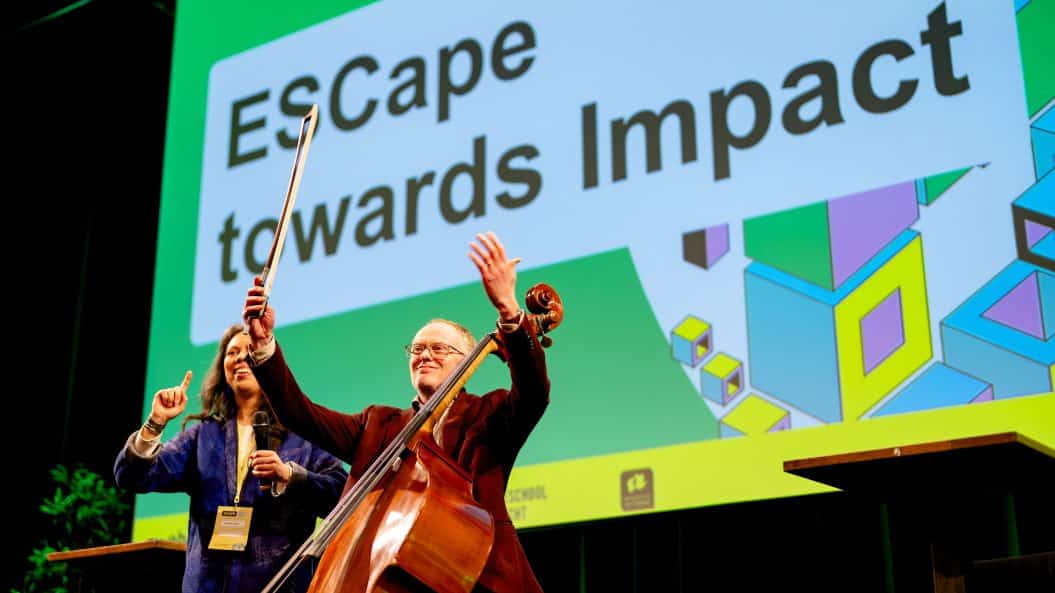
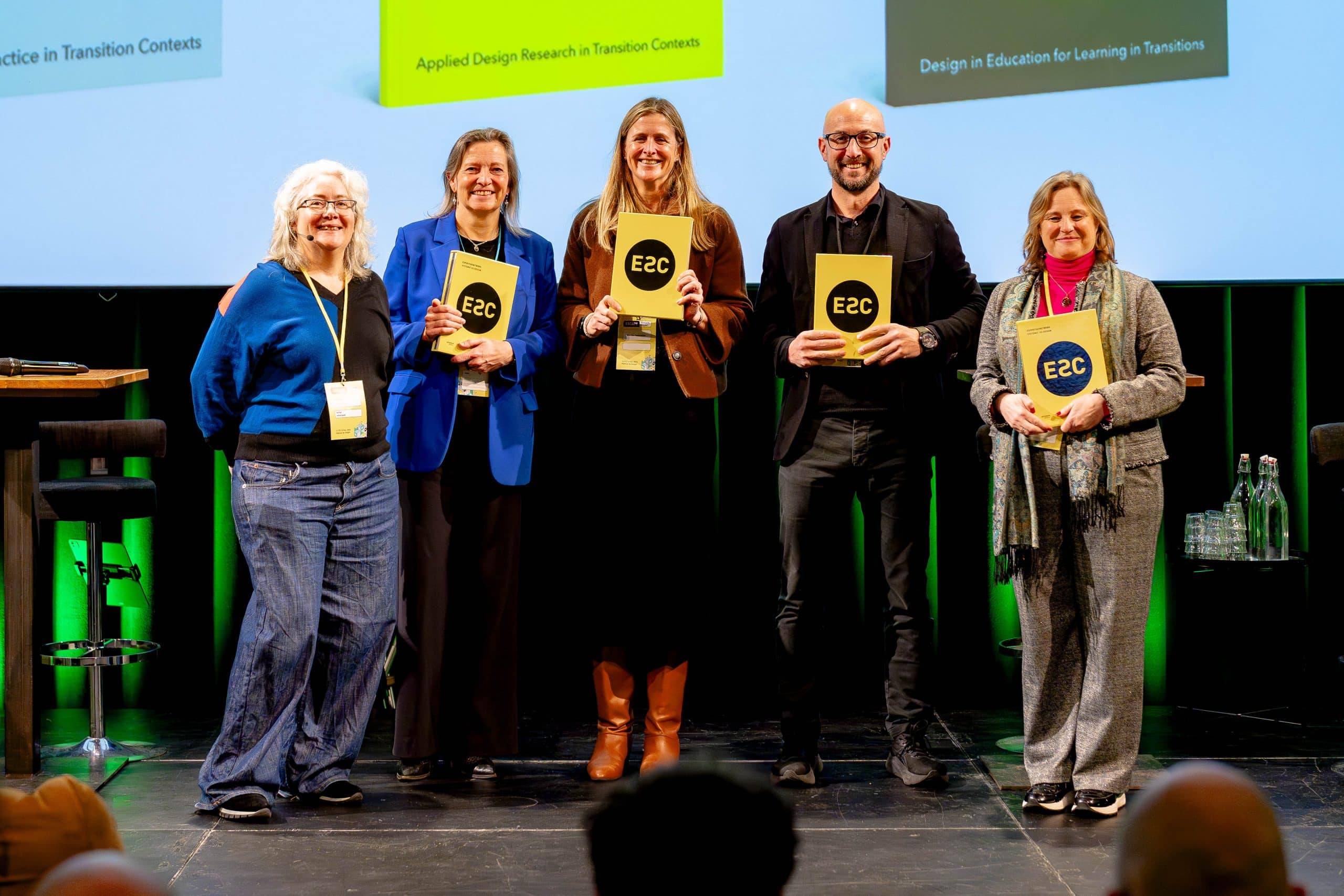
ESC also wants to make better use of and further develop the expertise and experience of creative agencies within the network. Through an open call (the ESCall), creative partners were able to reflect on their own knowledge products from their practice and further develop them. This resulted in the ESCall book. To conclude, the network published the ESC trilogy at the ESC conference in Pakhuis de Zwijger, which also includes the ESCollab book (ESC & research) and ESCuela book (ESC & education).
ESCuela programme
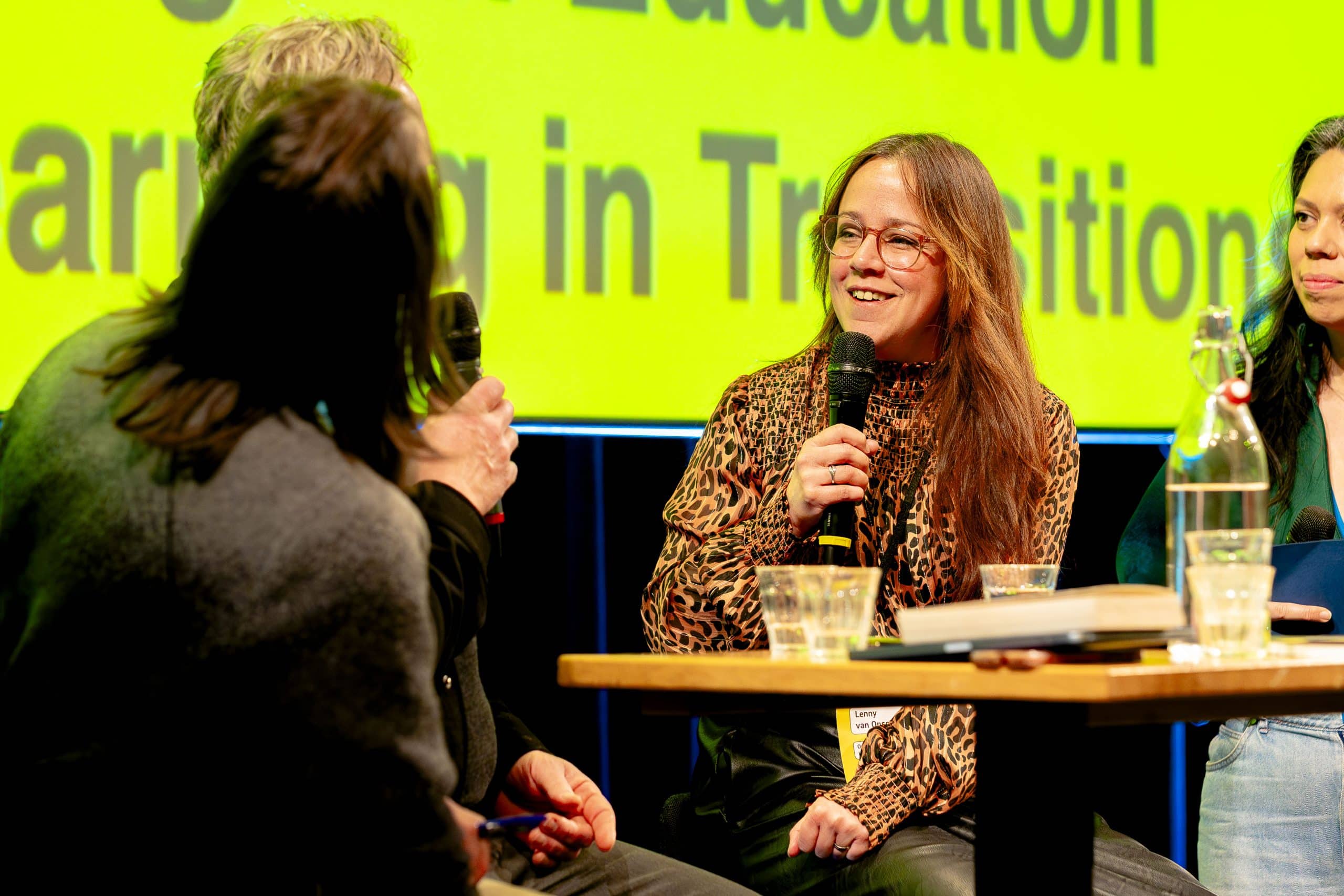
The ESC network generates knowledge that also benefits education and teachers. Part of the network is the ESCuela programme, which provides for a structural exchange of knowledge and people between the participating universities of applied sciences. One concrete outcome is the basic training course in Systemic Co-Design, which is being launched this year for any professional who wants to tackle social issues. Lenny van Onselen is a researcher at the Co-Design research group at Utrecht University of Applied Sciences and knowledge director at ESCuela. ‘The ESCuela book contains some great results of ESC for education. Think of the place that Systemic Co-Design has been given in our university’s existing Co-Design minor. Or how lecturers and students at Rotterdam University of Applied Sciences are using the Co-Design Canvas to tackle issues in Rotterdam neighbourhoods.’
‘We will continue to focus on the question of how Systemic Co-Design can be used to push the boundaries of education programmes.’ – Lenny van Onselen, knowledge director at ESC
Redesigning education
Systemic Co-Design also proves its value in initiating changes in education itself. For example, the teacher training programmes at Inholland University of Applied Sciences were redesigned with input from lecturers, students and professionals. The same happened with all healthcare and welfare programmes at Utrecht University of Applied Sciences and the technical programmes at Rotterdam University of Applied Sciences. ‘We also learned from The Hague University of Applied Sciences, which had already redesigned its education programmes based on co-design,’ says Lenny, who is delighted with the start of the second phase of the ESC network. ‘We will continue to focus on how Systemic Co-Design can be used to push the boundaries of programmes and align them with the dynamics of professional practice. In this way, we train professionals who have themselves learned to move with the practice.’