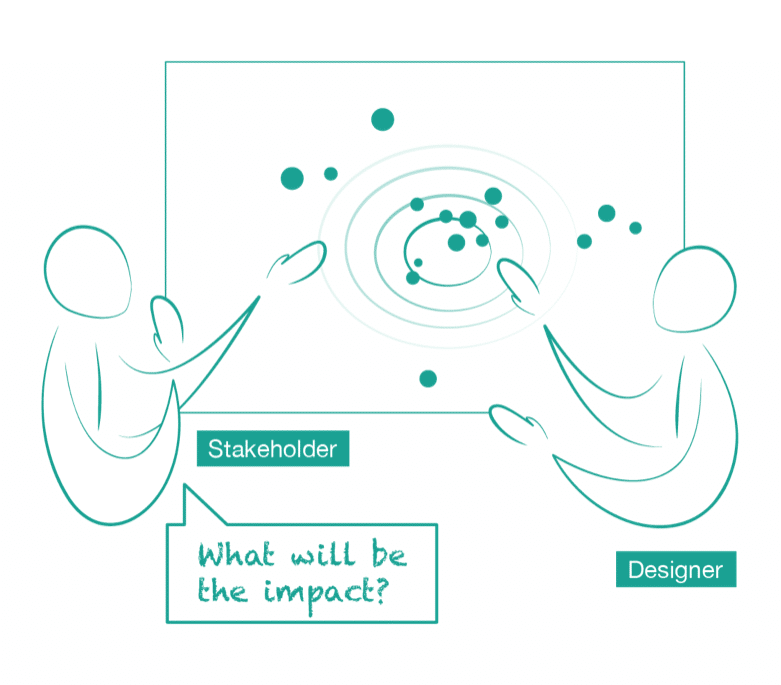
Social designers, researchers, and teachers are increasingly confronted with long-term issues and complex social systems such as healthcare or education. To make an impact and work strategically, they are developing new approaches and methods. This starts with a clear understanding of what ‘impact’ actually means and how social design can contribute to it.
To collaborate effectively—both among designers/teachers and with organizations that can benefit from social design—a shared language is essential. But how do you discuss long-term goals in “impact language”? And where does a system actually begin or end?
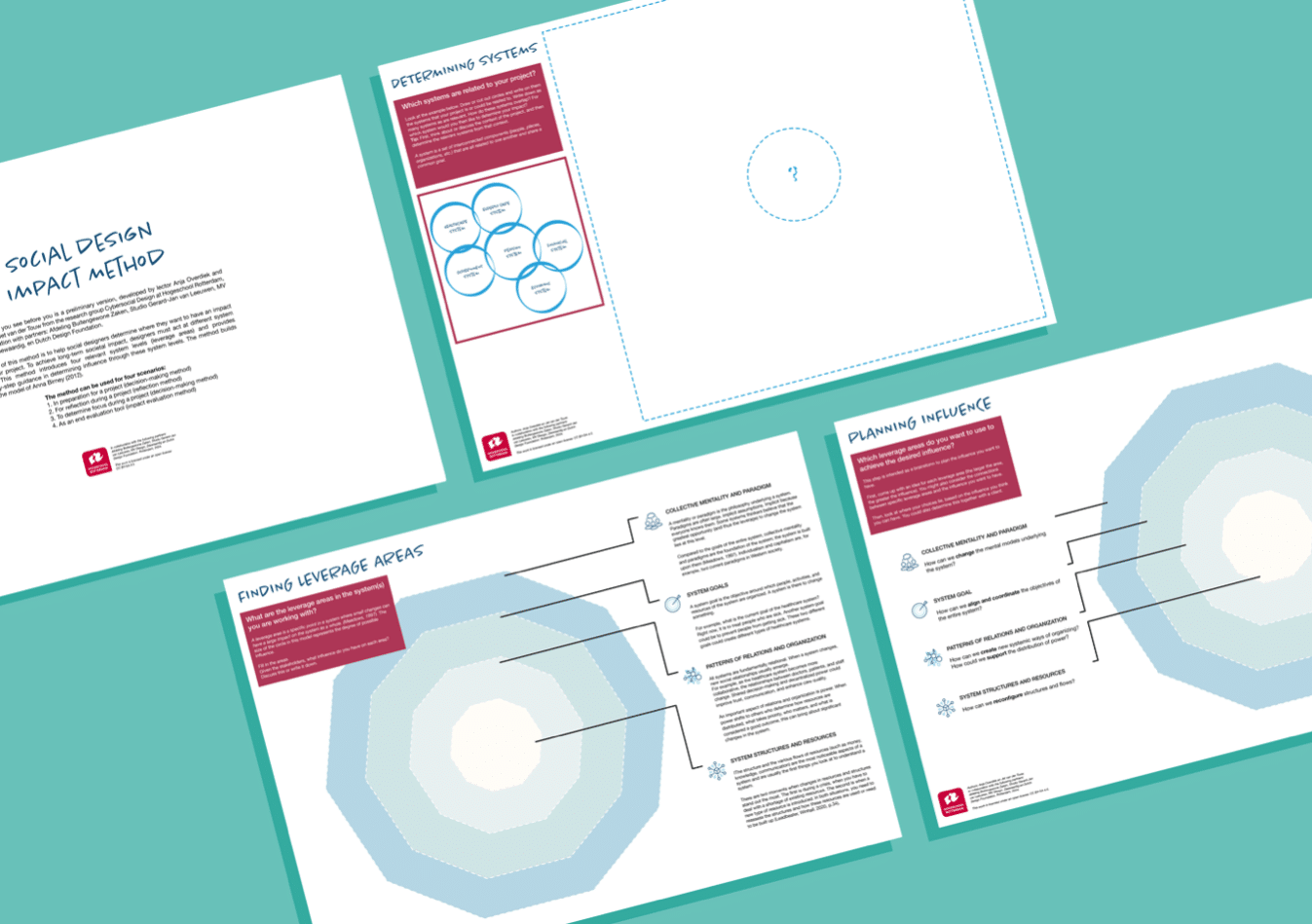
The Social Design Impact Method was developed in collaboration with social designers and supports them in determining what they want to influence with their project in order to contribute to impact in the longer term. Long-term social impact requires operating at different system levels. The method introduces four relevant system levels (known as leverage points) and offers step-by-step guidance on determining influence through these levels. It is based on a model by Anna Birney (2012) and the work of Donella Meadows.
A leverage area is a specific point in a system where small changes can have a major impact on the system as a whole (Meadows, 1997).